
Costa Rica is a country with diverse landscapes, featuring national parks, beaches, and mountain towns. Attractions spread across vast areas are what make travellers choose to drive. But first-time visitors are sometimes taken aback by the road conditions, which vary by region. Although the country’s road network offers easy driving in cities and on major highways, some routes have single-lane bridges and can be winding and gravelly in the rainy season.
This guide explains what to expect before getting behind the wheel in Costa Rica, making it much easier and more enjoyable.
🚗 Do You Really Need a Car in Costa Rica?
Driving a car is highly recommended for:
- itineraries to multiple destinations
- exploring national parks
- day-trips to beaches outside resorts
- moving with families
A car may not be needed for:
- travel plans in San José only
- those staying at all-inclusive resorts
- guided tours with shuttle bus services
Travellers looking for a flexible mode of transportation can rent a car in Costa Rica from any of the trusted local and international suppliers. They can choose a convenient pickup point upon arrival to start their road trip and easily return the vehicle at any location in the country, including airports, cities/downtowns, beaches, or hotels, for a one-way journey.
📋 Driving Rules Tourists Should Know
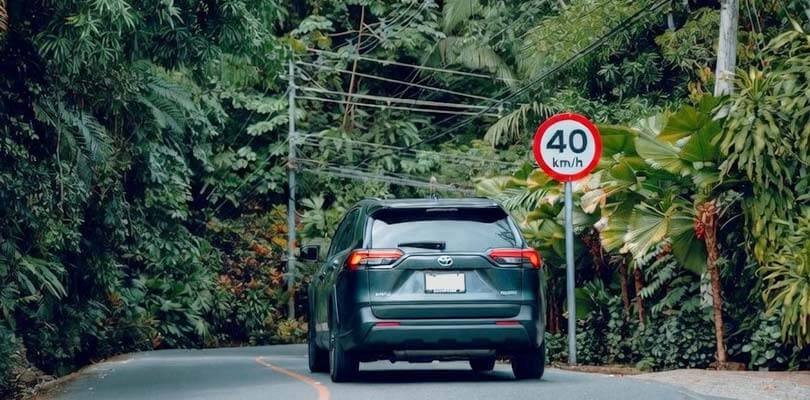
All drivers, both first-time visitors and regular travellers, must adhere to the local driving regulations to ensure a safe travel experience in Costa Rica and avoid traffic fines.
| Driving Side | Right-hand side of the road. Overtaking is done on the left. |
| Speed Limits | 40 km/h in towns 60 km/h on secondary roads 80–100 km/h on highways |
| Seat Belts | Seat belts are mandatory for all passengers. Children under 12 (or below required height/weight limits) should use child seats or booster seats. |
| Headlights | Headlights should be on at all times, even during the day. |
| Mobile Phone Usage | Illegal while driving. |
| Road Signage | Road signs exist, but can be misleading on roads outside cities. Some highways and rural roads lack route numbers or exit signs. |
| Warning Signs | Usually posted in Spanish. Rely on navigation apps like Waze or GPS, and on local guidance. |
| Alcohol Limits | 0.05% BAC is the general legal alcohol limit 0.02% BAC for new and professional drivers |
*Traffic regulations and driving rules can vary by cities, routes, and regions across the country. Keep an eye on the posted signs and maintain a safe speed accordingly.
🚦 Common Local Driving Behaviours
Pura Vida (pure life) is a sort of national motto, and the same attitude is reflected by Costa Rican drivers, who are generally friendly and cautious. They often use flashing headlights as signals, such as flashing headlights to warn of a police checkpoint ahead. Other indicators may also involve emergency flashers to alert other drivers to an obstacle.
Local driving is slower on rural roads and avoids aggressive tailgating. But seeing two-wheelers moving entire families might be a surprise for many travellers. Pedestrians jaywalking is also a usual sight. Drivers may even run red lights or stop signs if they think it’s clear. Drive defensively and expect the unexpected.
🧭 Navigation and Connectivity in Costa Rica

Mobile coverage in urban areas and on main roads is good, but remote regions cannot be navigated without GPS. Travellers can buy local SIM cards with affordable data plans at the airport or in a local shop to enjoy reliable network coverage. They can also ensure internet access for all devices throughout the journey by renting a portable Wi-Fi hotspot for the car.
Why Locals Prefer Waze
Locals tend to rely on the Waze app to stay updated on upcoming police checkpoints, accidents, and road closures along their route. It really helps with traffic updates when driving through dense areas around San José.
When Google Maps Works Better
Connection may be limited or lost on mountainous or jungle roads. This is when offline Google Maps can be used for staying on course. Download or save the maps and directions before you start your trip for a hassle-free experience.
🛣️ What Are Road Conditions Like in Costa Rica?
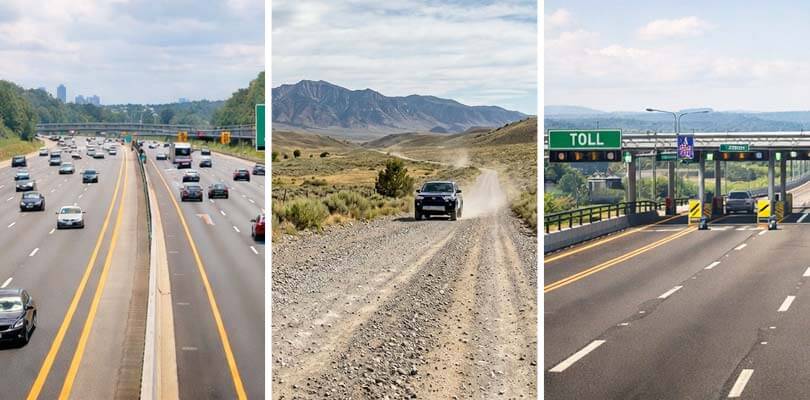
Given that road quality can vary across different regions in Costa Rica, you may need to adjust your driving accordingly. For instance, roads in:
🔹 Central Valley & San José: Highways have well-maintained multi-lane roads, and city streets are as smooth. Traffic congestion is common in San José during rush hours. Roads here (Routes 1, 3, 27) are in good shape.
🔹 Northwest (Guanacaste): Major highways (e.g., Route 1 north, Route 21) are paved. Secondary roads to beaches (e.g., Tamarindo, Nosara) may be gravel. Small roads are usually dusty in the dry season and can flood easily in the rainy season. And for those leading to a ranch and beaches require a 4×4 or river crossing.
🔹 Pacific Central/South: Route 27 from San José to Caldera is a modern toll highway to the central Pacific coast. But if you take the inland routes to Monteverde, Drake Bay, and Osa Peninsula, the roads are steep and gravelled. Since you may have to ford rivers, a 4×4 is generally recommended. Access roads in Monteverde are known for being rough.
🔹 Southern Zone (Osa Peninsula): Very remote with rough gravel roads and multiple river crossings. Only SUVs or trucks venture here.
🔹 Caribbean Coast: Fewer main roads. Route 32 from San José to Limon is a two-lane paved highway through the rainforest. Once past Limon, roads can degrade to gravel.
🔹 Mountain Passes: Route 2 (Cerro de la Muerte) is paved but at high elevation and usually foggy. Drive with caution and avoid night driving due to thick fog. Landslides can temporarily close high roads.
🚘 How Long Does Driving Really Take in Costa Rica?

Driving can take much longer than GPS estimates due to mountainous terrain, narrow two-lane roads, and slow-moving trucks. Costa Rica may be a small country, but a 100 km (60-mile) trip can take 2-3 hours.
Typical Travel Times Between Popular Destinations
The table below highlights usual travel times experienced by travellers on popular routes.
| Route | Distance | Google Maps Estimate | Typical Travel Time |
| San José → La Fortuna | ~130 km | 2h 45m | 3.5–4.5h |
| San José → Monteverde | ~145 km | ~3h | 4–5h |
| Liberia → Tamarindo | ~80 km | 1h 20m | 1.5–2h |
| San José → Manuel Antonio | ~170 km | ~3h | 3.5–4.5h |
| La Fortuna → Monteverde | ~115 km | ~3h | 3–4h |
*The actual drive time may vary, depending on your chosen route, time of day, traffic, and driving experience.
Because of that, travellers often rent cars to enjoy the freedom to travel at their own pace and stop along the way if required.
What Affects Driving Times
Common reasons behind travel delays in Costa Rica may include:
🔹 winding mountain roads
🔹 trucks and slow vehicles
🔹 narrow and single-lane bridges
🔹 road construction
🔹 rainy season delays
🗺️ Easy vs Challenging Driving Routes
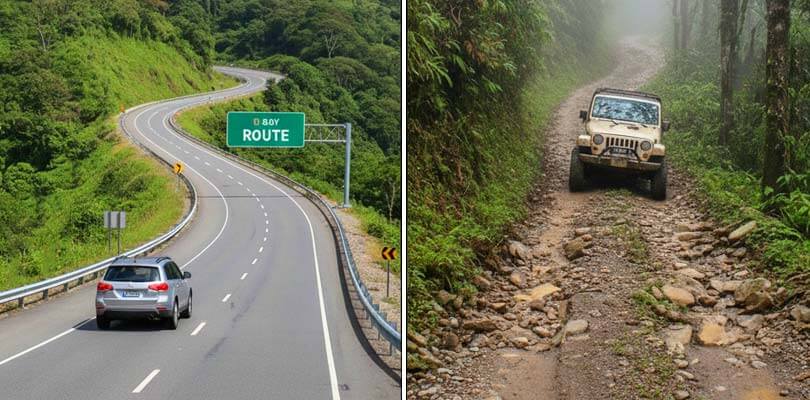
The following table provides an overview of popular road trip routes in different Costa Rican regions and the recommended vehicle type for taking on the journey based on driving difficulty.
| Route | Driving Difficulty | Vehicle Recommendation |
| San José → La Fortuna | Easy | 2WD usually sufficient |
| Liberia → Tamarindo | Easy | 2WD |
| San José → Manuel Antonio | Easy–Moderate | 2WD |
| La Fortuna → Monteverde | Moderate | 4×4 recommended |
| Nicoya Peninsula (Nosara area) | Moderate–Challenging | 4×4 recommended |
| Monteverde mountain access roads | Challenging | 4×4 recommended |
| Osa Peninsula (Corcovado region) | Challenging | 4×4 required |
🚙 When You Need a 4×4 (and When You Don’t)
Once a trip is planned, the next important thing for travellers is to determine whether they really need a 4×4 in Costa Rica or if a standard 2WD car will suffice. While that decision is mainly based on when and where you plan to go, understanding road conditions across the country can help you choose the right vehicle. As shown in the table above, a 4WD can be extremely useful for traversing rough terrain in remote or forested areas.
🌧️ What You Must Know About Driving in the Rainy Season
The two main seasons that can strongly affect driving in Costa Rica are:
Dry Season (December–April): Roads are mostly dry and passable. Tourist traffic peaks, specifically in Dec–Apr and in July. Unpaved roads in Guanacaste can get dusty. It is safer to pass through small roads in mountainous areas.
Rainy Season (May–November): Afternoons are followed by frequent downpours. Highways can close down due to slippery roads, muddy gravel sections, and landslides. So, check the weather and road conditions for your route before starting to drive.
🛡️ Safety Tips for Driving in Costa Rica
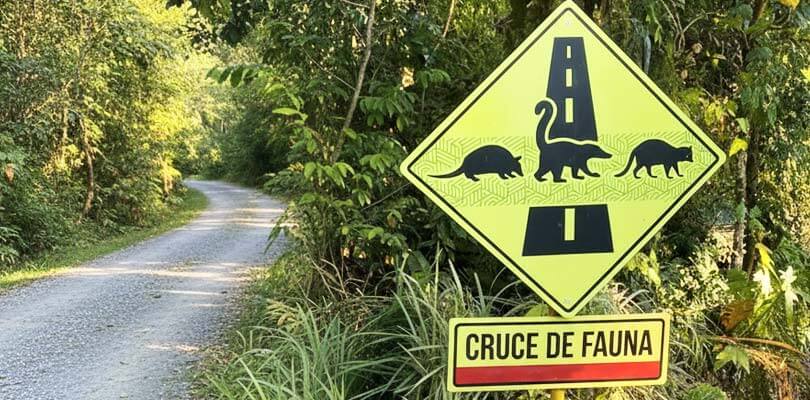
- Driving outside urban areas at night can be unsafe due to inadequate lighting and the lack of guardrails on several roads. Wildlife, such as deer, monkeys, pigs, and cattle, tend to wander onto dark roads. Use routes on well-lit highways after dark and stay alert.
- Watch for wildlife crossings if you’re driving through rural zones at dawn or dusk. There may even be crocodiles near rivers. Keep a safe distance from any animals on the road.
- Always keep your passport and licences at hand, as random traffic police stops are common.
- Lock your car’s doors and roll up windows at all times, even at traffic lights or in city traffic. Do not leave valuables in the car; visible snacks, electronics, and cameras may invite break-ins.
- Travellers can call 911 in case of an accidental medical emergency or major damage. Move the vehicle only if it is safe or blocking traffic. Take pictures of the licence plates and any damage to the vehicle, then inform the rental company right away.
- There have been incidents involving people scamming or robbing tourists in the name of help. So, drive to a safe, crowded place before stopping if you’re even slightly unsure.
🅿️ Parking Tips in Cities and Tourist Towns
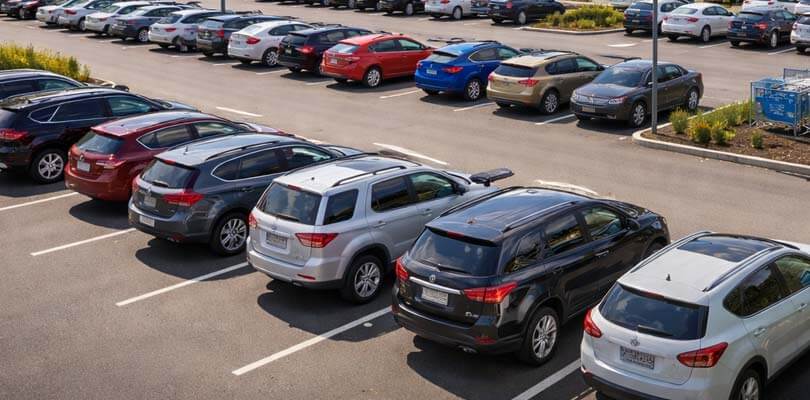
- Traffic in the Central Valley can be both confusing and overwhelming.
- Use a GPS and follow instructions carefully when driving through San José. The city has multiple one-way streets and roundabouts.
- Use officially guarded and paid parking lots in cities.
- Free street parking in San José is not only limited but can also be unsafe for valuables.
- Choose an official public lot or hotel parking for a safer option in towns like Jaco and Tamarindo.
- A $1–2 parking fee may be charged for an hour in central areas. No parking zones are marked with yellow lines.
- Local valet attendants, called guachimanes or guachis, often watch parked cars. They will issue tickets for a small fee (keep the ticket on the dashboard).
- Be aware of pedestrians and cyclists. Costa Ricans will frequently jaywalk or ride bikes on roads with no bike lanes. Yield to them when possible, even though they technically should give way.
💳 Costs to Expect When Driving

Though travel expenses can vary by individual requirements and itineraries, some of the common factors to consider while making your travel budget include:
Rental Prices for SUVs in the peak travel season can be as high as $750–$1,200 per week. The prices can drop drastically during the low season, to about $300–$750/week. Book as early as 4-6 weeks ahead of your trip to get the required vehicle. 4×4 SUV rentals are often limited on weekends and holidays.
Mandatory third-party liability insurance can cost an extra $15–$25/day. Rental deals often include Collision Damage Waiver, but it can sometimes be offered for around $15 per-day.
You may buy a Full Protection coverage for an additional $20/day. And extras like additional drivers, child seats, GPS, and more are usually charged as per supplier policies. Carefully review the insurance included in the rental deal to check if it overlaps with the optional policy to avoid paying twice.
Fuel costs can add up to 10–15 USD per day for a mid-size SUV. You will be charged by the supplier for refueling and service fees for returning the rental car with missing fuel.
Allocate 5–10 USD to pay at tolls for each major highway trip. Route 27 from SJ to Puntarenas has about 4 tolls, so you can calculate accordingly for your route.
⛽ Gas Stations Work Differently in Costa Rica
Gas stations are common in cities and towns and offer full-service. Petrol and diesel are available at about $1.20–$ 1.30 per litre. Drivers can stay in the car and ask the attendant which type of fuel to buy and how much to refill. Cash and credit card payments are widely accepted at most gas stations.
🚧 Toll Roads Near San José
Toll roads on Routes 27, 1, and 32 can cost about $0.30 to $1.50 for passing through each booth. You can pay in cash or by credit card. An electronic toll tag called QuickPass is available for use in the faster lanes on Route 27, but it’s not necessarily required. Some rental providers may offer a QuickPass for an extra fee.
💡 Useful Car Rental Tips
- Thoroughly inspect the car before leaving the pickup point. Photograph the vehicle as evidence against any future disputes. Make sure it has the same fuel level as specified in the agreement.
- Rental companies usually require you to return the car with a full-to-full fuel policy. In any case, a higher refuelling rate and service fee apply for returning a vehicle with missing fuel.
- About $1,000–$2,500 of security deposit is held by the supplier on the main driver’s credit card at pickup. This amount is fully refunded, as long as you drop off the car in the same condition as at pickup.
- Some vehicles listed as SUVs may not actually be 4×4 but 2WD models. If you plan to use a vehicle for off-road, confirm that the booking specifically lists 4WD or AWD.
- River crossings are usually not allowed by rental companies, even if you booked a 4×4 vehicle. Attempting these routes may void the insurance and make the renter fully responsible for any damage.
⁉️ Frequently Asked Questions
1️⃣ Do I need an International Driving Permit (IDP) in Costa Rica?
Travellers may use their valid driver’s licenses issued in the Roman alphabet from their home country. An IDP or a certified English translation is generally required if your original license uses a non-Latin script (e.g., Chinese, Arabic, Cyrillic), especially when renting a car.
2️⃣ Can I drive on any road with a 2WD rental car?
A 2WD car can easily handle road trips on paved highways and city streets. But scenic routes may have gravel, which makes it difficult for you to drive a standard vehicle. Seasoned travellers highly recommend a 4×4 for exploring areas like Monteverde and Osa, or for use during heavy rains.
3️⃣ What insurance do I need for a rental car in Costa Rica?
Costa Rican law mandates a third-party liability insurance, also called Supplemental Liability Insurance (SLI), for all vehicles. Collision Damage Waiver (CDW) is also required by rental suppliers, and is often included in quotes. CDW can sometimes be covered by your credit card if you provide a waiver letter from the issuing company. An additional full-protection policy is usually purchased by travellers for about $20/day for complete peace of mind.
4️⃣ How do I pay tolls on Costa Rican highways?
The majority of the toll booths accept Costa Rican colones and small US dollar bills. Some toll plazas may accept credit cards, but it’s best to keep some small cash on hand to avoid inconvenience.
5️⃣ Is it safe to drive at night in Costa Rica?
Roads in Costa Rica are generally drivable, but night driving on roads outside towns is not recommended. Many of those have no lighting or clear signage. And the common wildlife crossings at night further make the roads unsafe to drive on. Choose a route on major highways and go slowly if you must travel after it’s dark.
