

The need for a 4×4 in Costa Rica mainly depends on when you travel and which places you plan to explore. Travellers visiting popular beaches and cities during the dry season can usually save money by renting a 4×2 vehicle. But a 4×4 (or at least a high-clearance SUV) may be required for safe driving and accessing the difficult roads to mountains, national parks, or coastal areas. Popular tourist routes and highways are fully paved and easy to drive, but others leading to remote areas may even flood easily during the rainy months of May to November.
This guide explains when a 4×4 rental in Costa Rica is useful, where a 2WD car is usually enough, and what road conditions travellers should expect on some of the country’s most popular routes.
✅ 4×4 vs AWD vs 2WD in Costa Rica
One common misconception travellers have about SUV rentals is that all SUVs are 4×4 vehicles, but in fact, they come with different drivetrains. Understanding the differences among them can help you select the right vehicle for your Costa Rican trip.
| Feature | 4×4 (Four-Wheel Drive) | AWD (All-Wheel Drive) | 2WD / 4×2 |
| Power Distribution | Power is sent to all four wheels with locking capability | Power is automatically distributed between wheels | Power sent to two wheels only |
| Best For | Rough terrain, steep hills, muddy roads | Light gravel roads and wet conditions | Paved highways and cities |
| Road Conditions | Dirt roads, jungle routes, mountain access roads | Moderate rural roads | Well-maintained highways |
| Ground Clearance | Usually high | Medium | Low to medium |
| Rental Cost | Highest | Mid-range | Lowest |
| Fuel Consumption | Highest | Moderate | Most fuel-efficient |
| Typical Use in Costa Rica | Remote areas like Monteverde, Nicoya Peninsula, Osa Peninsula | Mixed driving with some rural roads | Popular tourist routes and cities |
| Popular Rental Models | Toyota Prado, Toyota Fortuner, Suzuki Jimny, Mitsubishi Montero | Toyota RAV4 AWD, Subaru Forester, Hyundai Tucson AWD | Toyota Yaris, Hyundai Accent, Nissan Versa, Toyota Corolla |
🛣️ Road Conditions in Costa Rica
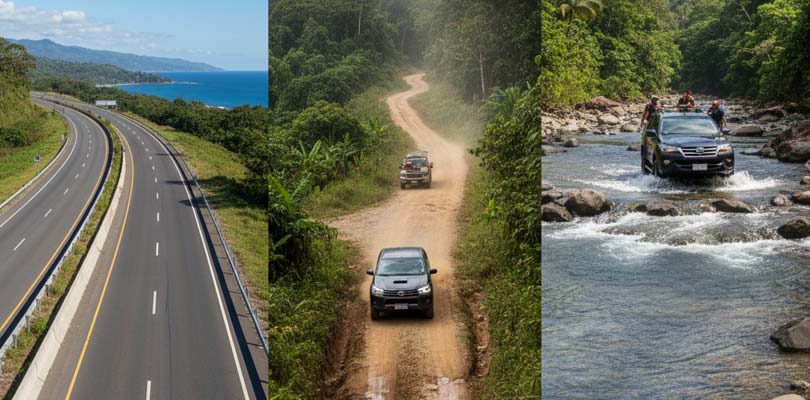
Knowing that road conditions can vary from one place to another and by season is important to choose the right vehicle for your trip.
🔹 Highways
The majority of the major highways, including Route 1 (Pan-American Highway), Route 27 (San José to Pacific), and Route 34 (Pacific Coast Highway), are paved and offer an easy drive for all car types. Meaning that you can travel by any car, irrespective of the drivetrain.
🔹 Rural Roads
Rural roads in Costa Rica are often gravelled, and potholes are quite common. Narrow one-lane bridges often connect village areas and steep hills. These bridges are usually situated at the base of descents or at sharp curves, which require the utmost caution when driving on them. Countryside roads may have minimal traffic, but often lack proper signage about names, speed limits, or directions.
🔹 River Crossings
Driving in the Osa and Nicoya Peninsulas is not considered easy, especially for travellers planning to explore these areas during the rainy season (May-November). You may need a high-clearance 4×4 to handle rough dirt roads and potential river crossings. But suppliers do not permit river crossings because the insurance does not cover potential damage costs.
🔹 Seasonal Road Conditions
The roads in Costa Rica during the dry season (Dec–Apr) are easy to drive, so even 2WD cars can handle most areas. But the same roads, particularly in rural areas, may be flooded during the rainy months (specifically in Sept-Oct). A 4×4 is beneficial for getting through muddy and mountain routes that become difficult.
🗺️ Tourist Routes and the Need for a 4×4
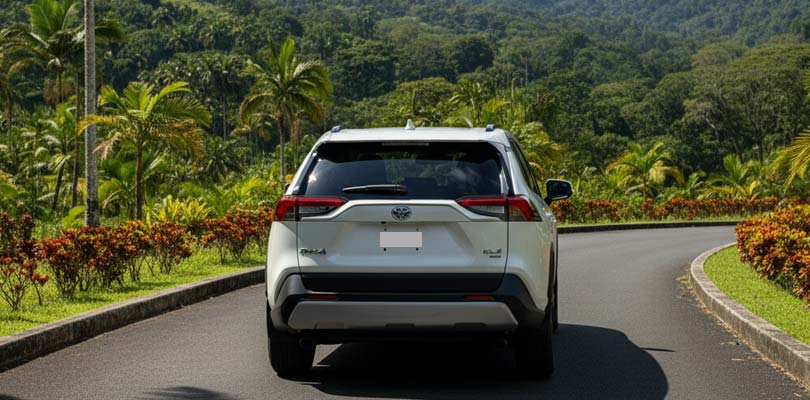
The following table presents the common routes taken by travellers and the need for a 4×4 to drive across different terrains, depending on the conditions.
| Route | Road Type | 4×4 Needed? |
| San José → La Fortuna | paved | No |
| San José → Manuel Antonio | paved | No |
| San José → Tamarindo | paved | No |
| Liberia → Guanacaste beaches | paved | No |
| La Fortuna → Monteverde | mountain + gravel | Recommended |
| Nicoya Peninsula (Santa Teresa, Nosara) | dirt roads | Recommended |
| Osa Peninsula → Corcovado | rough terrain | Yes |
| Drake Bay | river crossings | Yes |
*River crossings are usually not permitted with rental vehicles. Attempting to ford rivers may void insurance coverage and make the renter fully responsible for any damage.
🏙️ Destinations Where a 4×4 is Recommended
Seasoned travellers often emphasise the benefit of a 4×4 and high-clearance vehicles in the following situations:
- Monteverde Cloud Forest – Routes 606 and 145 are steep and winding mountain roads. Route 606 is mostly paved, but parts of Route 145 and some connecting roads near the reserve can still be gravel.
- Nosara & Samara Beaches – Unpaved and sometimes muddy roads provide access to inland parts of Nosara and Ostional.
- Santa Teresa/Mal País – The coastal road on the Nicoya Peninsula is gravel and often washed out after storms.
- Osa Peninsula (Corcovado) – Roads with intense rough logging and river crossings.
- Drake Bay – The road to the boat landing is mostly dirt.
- Pavones – Remote jungle roads to this surf town flood easily due to rain.
- Remote Eco-lodges – Rutted roads connecting to lodges in the mountains or jungle, such as Bajos del Toro, San Gerardo de Dota, and Tenorio.
- Safari and Rainforest tours – If your tour plans include off-road trails or overnight stays in jungle cabins, a 4×4 is advisable.
When You Do NOT Need a 4×4
A 4×4 is not strictly necessary, as most travellers arrive during the dry season, and their itineraries are limited to highway routes. Places like Jacó, Manuel Antonio, La Fortuna, Tamarindo, and the southern Caribbean coast are all reachable via paved roads, where you can easily drive a sedan or a 4×2 (AWD or 2WD) SUV.
You can always opt for a full 4WD SUV at a higher price for off-roading. But a 2WD SUV is a rather practical and cost-effective option for driving on regular roads. It can be used for city-and-beach circuits between San José, Jacó, Tamarindo, Liberia, and more.
🚙 Best Types of 4×4 Rental Cars in Costa Rica

Different variants of 4×4 cars are available for rent in Costa Rica, including:
✓ Compact 4×4
Small-sized 4×4s are the best option for couples and solo travellers to move across narrow and windy roads. The compact Suzuki Jimny and Daihatsu Terios models often prove quite reliable for affordable, off-road travel, while still being fuel-efficient.
✓ Mid-Size 4×4 SUVs
In this segment, the top models include the Toyota RAV4, the Hyundai Tucson, and the Mitsubishi Montero Sport. The RAV4 and Tucson offer all-wheel drive, making them useful for comfortable long road trips with families. The Mitsubishi Montero uses a 4×4 system, which can be utilised for off-roading.
✓ Full-Size 4×4 SUVs
Often preferred by large groups, full-size 4×4 SUVs include models such as the Toyota Prado, Toyota Fortuner, and Ford Everest. These provide ample space for both passengers and luggage, along with high clearance, allowing travellers to enjoy premium rides across remote areas.
💳 Cost Difference: 4×4 vs 2WD Rentals
4×4 and 2WD vehicles have rental prices as distinct as their specifications. But in addition to the base rate, the final booking cost also depends on factors such as location, insurance, and availability. A price hike of 20-40% may be seen during peak travel months, lasting from mid-December to April, when the demand is highest.
| Vehicle Segment | Off-Peak Season (May–Nov) | Peak Season (Dec–Apr) |
| 2WD Economy / Compact Cars | $25–45/day | $40–60/day |
| Compact SUVs (2WD / AWD) | $50–70/day | $70–90/day |
| 4×4 SUVs | $90–130/day | $130–180/day |
*Prices above are merely average estimates for your reference. Find accurate quotes by running a car search using your trip details in the booking form.
💡 Tips for Renting a 4×4 in Costa Rica
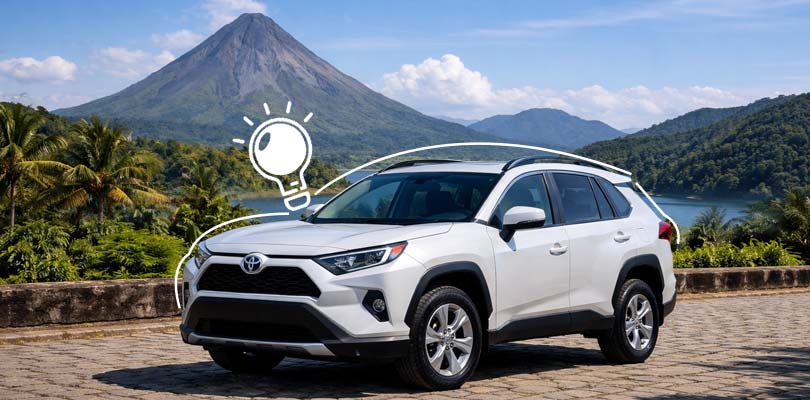
- Not every SUV is a true 4×4. Rental companies often categorise compact crossovers or SUVs as 2WD, which may not be reliable for driving on steep gravel roads or uneven terrain. For that reason, confirm that your chosen vehicle is actually 4×4 before hiring it for accessing remote areas or difficult roads.
- Even if a vehicle technically has four-wheel drive, ground clearance is equally important. The underside of a low-ride-height vehicle may get damaged by potholes and rocky roads. Opt for an SUV with higher ground clearance for better handling on rural roads and at national park entrances.
- Some of the rural routes may require river crossings without bridges. Given that rental insurance policies often exclude water damage, suppliers do not permit crossing rivers. So, it’s better to turn around and take a safe route to travel across.
- Download Google Maps for offline use in areas with weak signals. Many travellers also install apps like Waze for real-time traffic and local road updates to easily navigate through areas with limited or unreliable signage.
- If not necessary, avoid night driving outside cities. Rural roads may also lack lighting, making it unsafe to drive due to low visibility.
- You can save about $40–$75 per week by hiring a 4×4 vehicle with a manual transmission.
- The only roads leading to accommodations, such as eco-lodges, jungle resorts, and remote beach hotels, can sometimes be rough. Before arrival, you should ask your hotel whether a 4×4 is required to reach their location, or if they provide shuttle service.
⁉️ Frequently Asked Questions
1️⃣ Is a 4×4 necessary to travel in Costa Rica?
A 4×4 is not required for every trip in Costa Rica. Though it can be specifically useful for those travelling through remote regions or difficult terrains. Given that major destinations, such as San José, La Fortuna, and Manuel Antonio, are well-connected by a network of paved routes, you can travel using a 2WD.
2️⃣ Is renting a 4×4 in Costa Rica expensive?
Yes, a 4×4 rental car can cost you more than a standard vehicle with a 2WD system. The per-day prices for a compact car usually lie between $25–60, and for 4WD SUVs from $90–180. The rates are also relatively higher in peak season, when the demand for such vehicles is highest. The final booking costs can still vary significantly based on supplier, location, booking duration, and insurance coverage.
3️⃣ What is the cheapest 4×4 car rental in Costa Rica?
Compact models like the Suzuki Jimny and Daihatsu Terios are quite popular 4×4s among budget-conscious travellers. These are smaller SUVs that offer off-road capability without the expense of full-size SUVs.
4️⃣ Can 4×4 vehicles drive on mountain roads?
Yes. 4×4 vehicles make it easy to pass through uneven mountain roads in Costa Rica. Their off-road capability and extra traction help travellers climb steep terrains and explore remote locations with poorly maintained roads.
5️⃣ Are all SUVs actually 4×4?
No. Many vehicles that rental companies list as SUVs are actually 2WD. This often confuses travellers, who may assume all SUVs are 4×4s. Compact crossovers such as the Toyota RAV4 may be available in both 2WD and AWD versions. Check the drivetrain specifications to confirm that your chosen car is 4WD before booking.
6️⃣ Are all roads in Costa Rica difficult to drive?
It is generally easy to drive on paved highways and road networks between cities in Costa Rica. But roads may be gravelled or steep enough to require extra careful driving in village areas, mountain chains, and remote coastal regions.
7️⃣ Do you need a 4×4 for the Nicoya Peninsula?
4×4 is advisable in the Nicoya Peninsula (especially for Nosara and Santa Teresa), as some roads are muddy or impassable in the rain. After the Puntarenas to Paquera ferry, the main route (Route 160/Route 21/Route 150) is a mix of pavement and gravel. The highway portion to Nicoya town and Samara is paved, but access roads to Nosara and Santa Teresa are dirt and full of potholes. In fact, the road from Samara to Nosara is paved but badly potholed, so a high clearance is recommended.
8️⃣ Can you drive a 2WD car around Costa Rica?
Yes. A 2WD vehicle is sufficient for driving across popular tourist routes. And especially when you move between cities and well-developed destinations. Travellers often rent economy cars and explore different regions of the country with ease by avoiding remote or poorly maintained roads.
