
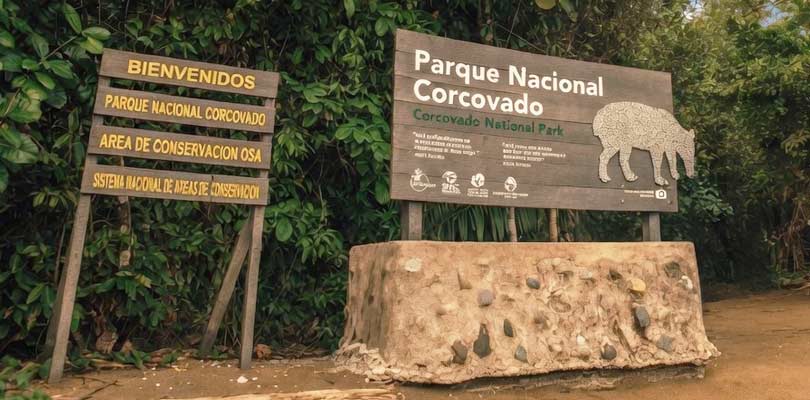
Overview & Significance
Corcovado National Park sits at the remote southwestern tip of Costa Rica’s Osa Peninsula, a rugged arm of jungle and coastline that juts into the Pacific Ocean. National Geographic famously called it “the most biologically intense place on Earth” — a title that has defined the park’s reputation among naturalists, scientists, and adventure travellers ever since.
Covering 424 square kilometres, Corcovado is Costa Rica’s largest national park and shelters an astonishing 2.5% of the planet’s total biodiversity within just 0.001% of the Earth’s surface. It encompasses 13 distinct ecosystems — from lowland tropical rainforest and highland cloud forest to mangrove swamps, jolillo palm forests, and wild Pacific coastline — making it unlike any other protected area in Central America.
The park was gazetted in 1975, at a time when ecologists and environmentalists raised urgent alarms about the rapid destruction of the Osa Peninsula’s forests by illegal gold mining and logging. Its creation was not without controversy — some former inhabitants were displaced — but over five decades, Corcovado has evolved into one of the most celebrated success stories in global conservation history.
| AT A GLANCE | Quick Reference |
| Location | Osa Peninsula, southwestern Costa Rica |
| Established | 1975 |
| Size | 424 km² (164 sq miles) — largest national park in Costa Rica |
| Biodiversity | 2.5% of the world’s biodiversity in 0.001% of its surface |
| Best Bases | Drake Bay (northwest) or Puerto Jiménez (southeast) |
| Entry Rule | Mandatory certified guide — no solo entry permitted |
| Visitor Cap | Strictly limited — book months in advance |
| Closes | Sirena Sector closes entirely in October |
| Park Entry Fee | Approx. USD $18–20 per person (foreign visitors) |
| Children <2 | Free entry |
| Over 65 / Residents | Free or reduced entry |
⭐ The Name: Corcovado
There are two popular explanations for the park’s name. The first points to a distinctive rock formation on the beach that resembles a humped or arched back — “corcovado” in Spanish relates to something hunched or curved. The second version traces the name to the Sirena River, which winds through the landscape in dramatic curves, much like a bucking horse leaping in surprise. Either way, the name carries a sense of wildness and untamed character that perfectly suits the place.
🌿 Ecosystems & Landscapes
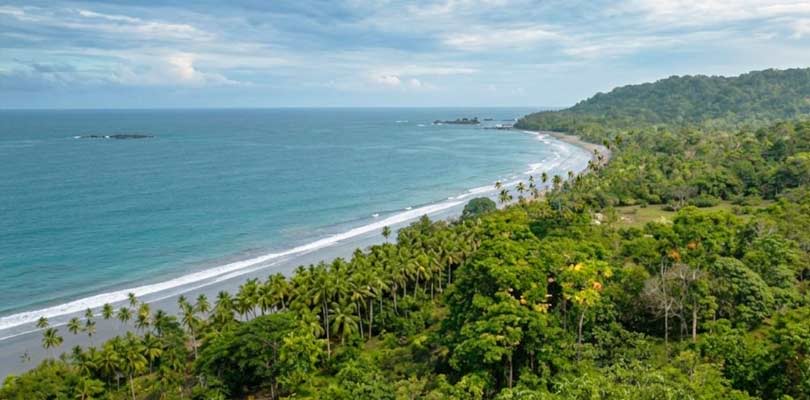
Corcovado’s 13 major ecosystems create a complex mosaic of habitats that supports its extraordinary biodiversity. No other national park in Costa Rica — and few in the world — contains such a compressed concentration of distinct ecological zones.
☑️ Lowland Tropical Rainforest
The dominant habitat within the park, the lowland rainforest features some of the tallest trees in Central America. Towering canopy species reach 50 to 60 metres, their vast buttressed roots anchoring them in the thin, nutrient-poor soils. Giant woody lianas and abundant herbaceous vines thread through the understorey, creating a living cathedral of vegetation. These forests represent the only remaining old-growth wet forests on the entire Pacific coast of Central America.
☑️ Highland Cloud Forest
At higher elevations, cooler temperatures and persistent mist nurture cloud forest zones, where epiphytes — orchids, bromeliads, mosses — drape every surface. These areas receive more rainfall than any other part of the park and serve as vital water catchments for the rivers that flow down through the lowlands to the sea.
☑️ Mangrove Swamps
Along the park’s estuaries and river mouths, mangrove forests form dense, tangled networks of salt-tolerant trees. These habitats are nurseries for fish, crustaceans, and marine invertebrates, and they provide critical nesting habitat for waterbirds. Kayaking through the mangrove channels is one of the most immersive ways to explore this ecosystem.
☑️ Jolillo Palm Forest
Unique to the Osa Peninsula, jolillo palm (Raphia taedigera) forest forms impenetrable stands in low-lying, seasonally flooded areas. These ancient forests are home to specialist species found nowhere else in the region.
☑️ Pacific Beaches & Coastline
Corcovado’s coastline stretches for kilometres of wild, undeveloped Pacific beach. Sea turtles nest here, bull sharks patrol the river mouths, and scarlet macaws wheel overhead. The beach trails are passable only at low tide, making timing a critical part of any visit.
🐅 Wildlife: The Heart of the Park
Corcovado is the crown jewel of wildlife watching in Costa Rica — a country already famous for its extraordinary fauna. The park is home to all four species of Costa Rican primates, all three cat species, both sloth species, and some of the most endangered and elusive mammals on the continent. For many visitors, a single morning walk yields more remarkable sightings than weeks of searching elsewhere.
Mammals
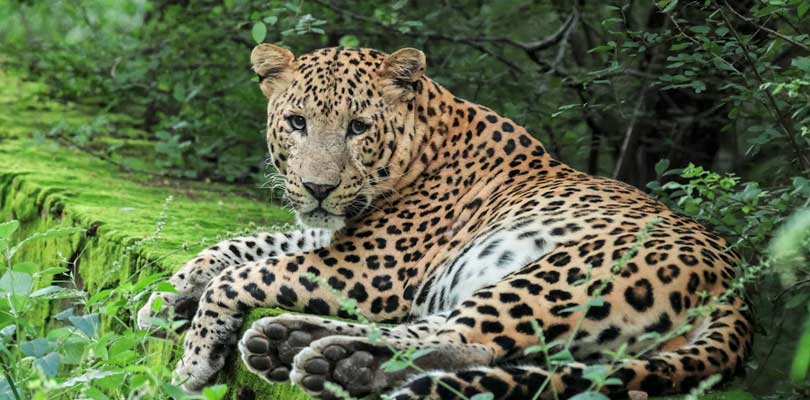
The park’s mammal list reads like a who’s who of Central American wildlife:
- Jaguar (Panthera onca) — the apex predator of the Americas, Corcovado holds one of the healthiest jaguar populations remaining on the Pacific coast of Central America. Sightings are rare but not unheard of, especially near Sirena at dawn.
- Puma, Ocelot & Jaguarundi — three smaller wild cats also roam the park, the puma being the most commonly encountered of the three.
- Baird’s Tapir — the largest land mammal in Central America, tapirs are frequently seen on the beaches near Sirena Ranger Station, particularly in the early morning and evening hours.
- Four Primate Species — mantled howler monkeys (you’ll hear them before you see them), white-faced capuchins, spider monkeys, and the rare, endangered squirrel monkey (mono tití), one of Costa Rica’s most threatened species.
- Two Sloth Species — both the three-toed and two-toed sloth inhabit the park’s forests.
- White-lipped Peccary — travelling in large, noisy herds, encountering these wild pig relatives on the trail is an unforgettable (and slightly alarming) experience.
- Anteaters, Tamanduas, Agoutis, Coatis, Kinkajous & Tayras — the supporting cast of Corcovado’s mammal community is rich and diverse.
- Bull Sharks — present in the park’s river mouths, particularly the Río Sirena, these sharks are one of Corcovado’s most dramatic and unexpected wildlife features.
Birds
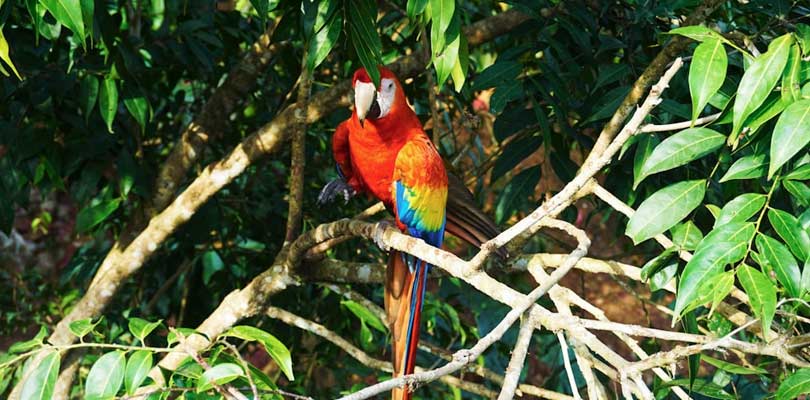
With over 400 confirmed bird species, Corcovado is a world-class birding destination. Among the most sought-after sightings:
- Scarlet Macaw — arguably Costa Rica’s most iconic bird, macaws are abundant in Corcovado and frequently seen in raucous, colourful flocks flying over the forest canopy.
- King Vulture — a striking and imposing scavenger, rarely seen outside Corcovado and a handful of other remote locations.
- Harpy Eagle — one of the world’s most powerful raptors, the harpy eagle is present in the park though extremely difficult to spot.
- Keel-billed & Chestnut-mandibled Toucans — both species are commonly seen foraging in the fruit trees.
- Various Trogons, Manakins, Tanagers & Hummingbirds — the understorey is alive with colour and song, rewarding patient observers with spectacular close-up views.
Reptiles & Amphibians
Corcovado shelters American crocodiles (particularly in the lagoon near Sirena), four sea turtle species that nest on its beaches, poison dart frogs in jewel-like colours, and dozens of snake species including the fer-de-lance and boa constrictor. Over 10,000 insect species have been catalogued here — arguably the most diverse insect community anywhere in the Americas.
Marine Life
The waters off Corcovado and nearby Caño Island Biological Reserve are rich with marine biodiversity. Humpback whales are regularly spotted on the boat journey from Drake Bay. Dolphins accompany boats, spinner and bottlenose being the most frequent. Whale sharks, manta rays, sea turtles, and a spectacular array of coral reef fish make Caño Island one of the top snorkelling and diving destinations in all of Costa Rica.
🏞️ Park Sectors & Ranger Stations
Corcovado is divided into five sectors, each with its own ranger station and entry characteristics. Understanding the sectors is essential for planning your visit.
| Sector | Entry Point | Highlights | Notes |
| Sirena | Boat from Drake Bay or Puerto Jiménez; light aircraft | Best wildlife, tapirs on the beach, accommodation, night tours | Most popular; visitor cap strictly enforced; closes in October |
| San Pedrillo | Drake Bay (north) | Waterfalls, seclusion, bunks & camping | Lodges at Drake Bay arrange guided entry here |
| La Leona | Carate (south) | Beach hiking from Carate, sea turtle nesting | Entry by 4WD to Carate then 1-hour beach walk |
| Los Patos | La Palma (east) | Inland cloud forest, diverse birding | Connects to Sirena via a challenging 10-mile trail |
| El Tigre | Dos Brazos (east) | Off-the-beaten-path, circular trail, gold-panning history | Quietest sector; good for those seeking solitude |
🗺️ Getting There
Reaching Corcovado is part of the adventure. The park’s remoteness is one of its greatest assets — and one of its biggest logistical challenges. The two primary gateway towns are Drake Bay (for the northern and Sirena sectors) and Puerto Jiménez (for the southern sectors).
From San José to Drake Bay
🔹 By air — a 30-minute domestic flight with Sansa Airlines or Costa Rica Green Airways. The fastest and most comfortable option. Most lodges will arrange transfers from the small Drake Bay airstrip.
🔹 By road and boat — drive or take a bus to Sierpe (approximately 8 hours from San José), then take a 1-hour boat ride across the Térraba-Sierpe river delta to Drake Bay. The river journey through the mangroves is beautiful in its own right.
From San José to Puerto Jiménez
🔹 By air — 50-minute domestic flight to Puerto Jiménez airport.
🔹 By road — approximately 8–10 hours by car or bus along the Costanera Sur highway, a scenic coastal route that traverses some of Costa Rica’s most dramatic landscape.
🔹 By ferry — a passenger ferry connects Golfito to Puerto Jiménez across the Golfo Dulce, a pleasant and affordable option.
From Drake Bay to Sirena
🔹 By boat — the most popular option. Boats depart daily around 6:00 AM from Playa Colorado in Drake Bay. The journey takes a little over an hour. Expect a wet landing — you’ll wade through shallow surf to reach the beach. Bring waterproof bags and water shoes. Humpback whales are frequently spotted en route.
🔹 By light aircraft — charter flights to the Sirena airstrip are available from Drake Bay, Carate, and Puerto Jiménez. The shortest and driest route.
🔹 On foot — the beach trail from La Leona to Sirena (roughly 14 miles / 23 km) must be walked at low tide. A classic adventure, but physically demanding and requires careful tidal timing.
📜 Visiting Rules & Entry Requirements
Since 2014, entering Corcovado National Park independently has been prohibited. All visitors must be accompanied by a certified local guide registered with the national park service. Freelance guides — even those holding ICT certification — are not permitted. This rule was introduced to improve conservation outcomes, manage visitor impact, and support the local guiding economy.
Practical Requirements
▪️ Book your tour in advance — Sirena Sector has a strict daily visitor cap. During high season (December to April), spots can fill up months ahead.
▪️ Purchase tours through a certified operator or your lodge. Day tours and multi-day tours can also be arranged directly through accredited agencies in Drake Bay or Puerto Jiménez.
▪️ Park entry fees (approximately USD $18–20 for foreign adult visitors) are typically included in tour packages, but confirm this when booking.
▪️ Children under 2 enter free. Visitors over 65 and Costa Rican residents receive discounted or free entry.
▪️ The Sirena Sector closes entirely in October — the park’s wettest month — for ecological regeneration. All other sectors remain open.
Top Things to Do
✅ Wildlife Tracking Hikes
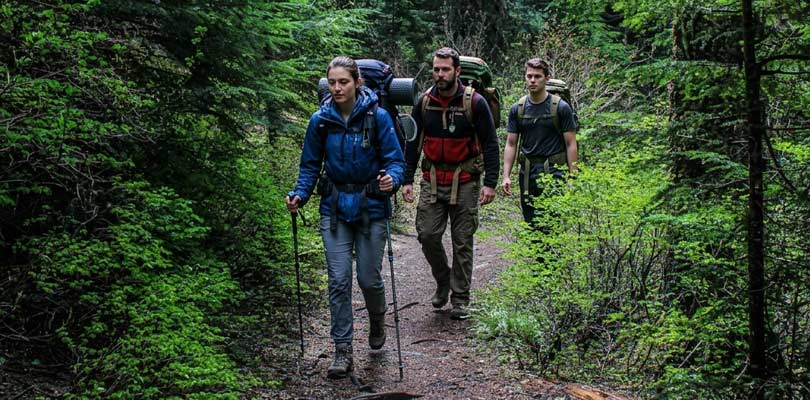
The primary draw of Corcovado is a guided walk through primary rainforest with an expert naturalist. Morning departures (around 6:00 AM) and evening walks yield the best wildlife sightings. An experienced guide is essential — a local guide with 40/40 vision and deep knowledge of animal behaviour will show you things you would simply walk past alone. Common sightings include tapirs on the beach, all four primate species, sloths, and a staggering array of birds.
✅ Night Tours at Sirena
After dark, Corcovado transforms. Night tours from Sirena reveal the forest’s nocturnal residents — tree frogs, sleeping birds, tarantulas, and the occasional puma or ocelot. This is one of the most atmospheric wildlife experiences available anywhere in Costa Rica.
✅ Overnight Stay at Sirena Ranger Station
Spending the night at Sirena is widely considered the definitive Corcovado experience. The station offers five dormitory-style rooms, each with bunk beds, shared cold-water showers, and electricity from solar panels (available from 5:30 AM to 8:30 PM). It is basic by any measure — sheets and towels are not provided, private rooms are available only if space permits, and power outlets for charging devices are not available. But the reward is extraordinary: waking at dawn to howler monkeys, stepping outside to find a tapir grazing near the buildings, and experiencing the forest in its most alive and magical hours.
✅ Beach & Coastal Walks
The wild Pacific beach stretching between Sirena and other stations is one of Corcovado’s most dramatic landscapes. Walked only at low tide, these trails are flanked by primary rainforest on one side and the open Pacific on the other. Keep eyes open for sea turtle tracks, whale spouts offshore, and the ever-present scarlet macaws overhead.
✅ Snorkelling & Diving at Caño Island
A short boat ride from Drake Bay, Caño Island Biological Reserve is one of Costa Rica’s premier marine experiences. Crystal-clear waters with excellent visibility shelter diverse reef fish, sea turtles, rays, and dolphins. Whale sharks and hammerhead sharks are occasionally encountered. Most Drake Bay lodges include Caño Island tours as part of their packages.
✅ Kayaking the Mangroves
Paddling through the estuaries and mangrove channels surrounding the park offers a completely different perspective on Corcovado’s ecosystems. Kingfishers, herons, crocodiles, and river otters are frequently spotted on these quiet, paddled routes.
✅ Whale Watching
The waters of the Osa Peninsula are a humpback whale nursery. Humpbacks visit from both the northern hemisphere (July–November) and southern hemisphere (December–April), making this one of the only places in the world where whales can be seen year-round. Boat tours frequently encounter mother-and-calf pairs.
📝 When to Visit
Corcovado has a pronounced wet and dry season, and the timing of your visit significantly affects your experience.
| Season | Months | Conditions | Best For |
| Dry Season | December – April | Lower rainfall, easier trails, peak crowds, higher prices | First-time visitors, beach walks, boat access |
| Green Season | May – September | More rain, lush vegetation, cooler temperatures, fewer visitors | Budget travel, fewer crowds, dramatic scenery |
| Wettest Month | October | Sirena Sector closed; heaviest rainfall; some trails impassable | Visit other sectors only; not recommended for Sirena |
| November | Transitional | Rains easing; good compromise between cost and conditions | Value travel; moderate crowds |
🧳 What to Bring
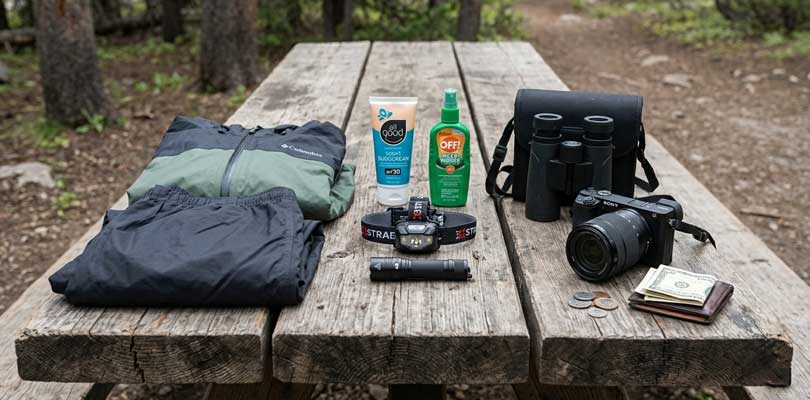
Corcovado is a hot, humid, and genuinely wild environment. Packing thoughtfully makes the difference between a miserable and a memorable experience.
▪️ Sturdy waterproof hiking boots for trails; water shoes or sandals for the wet boat landing. Do not bring a rolling suitcase — a daypack or backpack only.: Footwear
▪️ Lightweight, quick-drying long pants and long-sleeved shirts provide the best balance of sun protection, insect protection, and cooling in humid heat. Avoid cotton.: Clothing
▪️ A lightweight, packable rain jacket is essential at any time of year. Afternoon showers are common even in dry season.: Rain gear
▪️ DEET-based repellent is strongly recommended. Mosquitoes and no-see-ums are significant, particularly in the wet season. Insect repellent is expensive in Costa Rica — bring it from home.: Insect repellent
▪️ High SPF. Tropical sun is intense even under cloud cover, and you will be on open beach as well as under the canopy.: Sunscreen
▪️ Essential for night tours and navigating the station after electricity shuts off at 8:30 PM. Bring extra batteries — no charging points are available.: Flashlight or headlamp
▪️ Carry at least 2–3 litres of water. Hydration is critical in the heat. Energy-dense snacks supplement the basic meals at Sirena.: Water & snacks
▪️ An absolute must. Wildlife is often spotted at canopy height or across open forest. A 10×42 or similar pair will dramatically improve your experience.: Binoculars
▪️ Bring your best wildlife camera setup. A telephoto lens (200mm+ equivalent) is valuable for bird and mammal photography.: Camera
▪️ Protect electronics and documents during the wet boat landing and in heavy rain.: Dry bags
▪️ Puerto Jiménez and Drake Bay have ATMs, but connectivity can be unreliable. Bring sufficient cash (colones and US dollars) before departing for the park.: Cash
▪️ The boat from Drake Bay can be rough. Take Dramamine or a similar medication beforehand if you are prone to seasickness.: Motion sickness medication
📋 Practical Information
Accommodation at Sirena
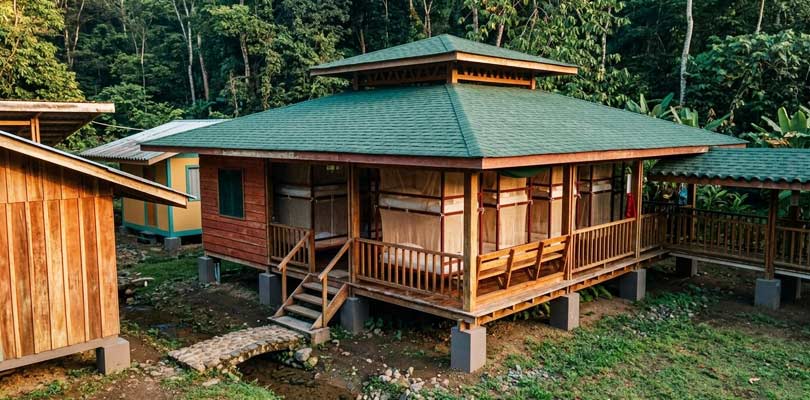
Sirena Ranger Station has five dormitory-style rooms with bunk beds. Sheets and towels are not provided — bring a lightweight sleeping bag liner and a quick-dry travel towel. Shared cold-water bathrooms are available, and a dining hall serves basic but filling meals (reservation and payment required in advance). Electricity runs from solar panels between 5:30 AM and 8:30 PM. A small nature store and lockers (USD $5 key deposit) are available on site.
Accommodation Outside the Park
Drake Bay offers a wide range of lodge options, from budget guesthouses to mid-range eco-lodges and a handful of genuinely upscale jungle retreats. Most are all-inclusive and include meals, guided Corcovado tours, and Caño Island snorkelling. Puerto Jiménez, on the southeastern side, has more town infrastructure — restaurants, shops, ATMs — and suits independent travellers who want flexibility.
Health & Safety
- There are no medical facilities within the park. Carry a basic first-aid kit including blister treatment, antiseptic, and any personal medications.
- Do not swim in rivers — American crocodiles and bull sharks inhabit the waterways. Even the beach at river mouths is potentially dangerous.
- Stay on marked trails and do not accept unsolicited help if your vehicle breaks down near the park. Follow your guide’s instructions at all times.
- The park’s heat and humidity can cause rapid dehydration and heat exhaustion. Drink water consistently and rest in shade when needed.
- Costa Rica has a functioning emergency system — dial 911. Satellite phones or PLBs (personal locator beacons) are recommended for multi-day hikers.
Conservation Rules
Corcovado has some of the strongest visitor conduct rules of any national park in Costa Rica. The following are strictly prohibited:
- Feeding wild animals
- Removing any plant, animal, mineral, or artefact from the park
- Camping outside designated areas
- Littering or introducing non-biodegradable materials
- Making excessive noise that disturbs wildlife
- Entering the park without a certified registered guide
- Using drones without prior permission from park authorities
📍 Nearby Attractions
The Osa Peninsula rewards those who venture beyond the park boundaries. The entire region is one of the most ecologically rich and unspoiled corners of Costa Rica.
➤ One of Costa Rica’s top snorkelling and diving sites, 19 km off the Drake Bay coast. Outstanding marine biodiversity, humpback whales, and pre-Columbian stone spheres.: Caño Island Biological Reserve
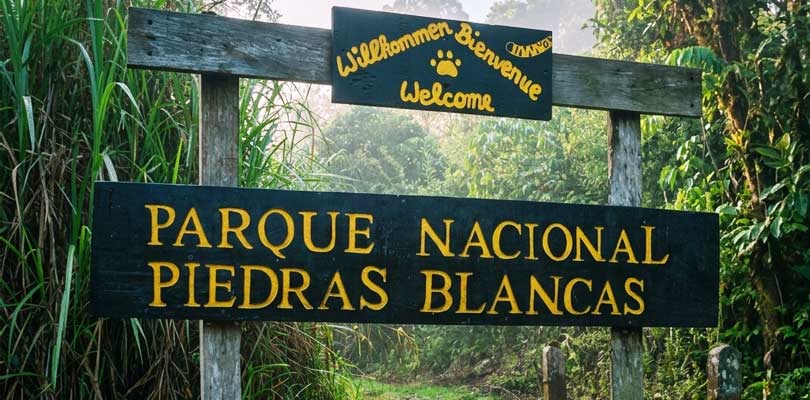
➤ A quieter alternative to Corcovado on the eastern shore of the Golfo Dulce. Excellent birding and hiking with almost no crowds.: Piedras Blancas National Park
➤ The ‘Sweet Gulf’ between the Osa Peninsula and the mainland is one of the few tropical fjords in the world and a key humpback whale nursery. Kayaking and dolphin watching are outstanding.: Golfo Dulce
➤ The southern tip of the peninsula is a surf hotspot and wildlife corridor with resident scarlet macaws, howler monkeys, and occasional jaguar sightings.: Matapalo & Cabo Matapalo
➤ A small, friendly community that serves as the main gateway to the park’s northern sector. Fresh seafood, sunset boat tours, and a genuinely laid-back atmosphere.: Drake Bay Town
➤ The largest town on the peninsula — a frontier-flavour hub with restaurants, a farmers’ market, kayak rentals on the Golfo Dulce, and the best infrastructure for independent travellers.: Puerto Jiménez
🚙 Getting Around the Osa Peninsula by Car
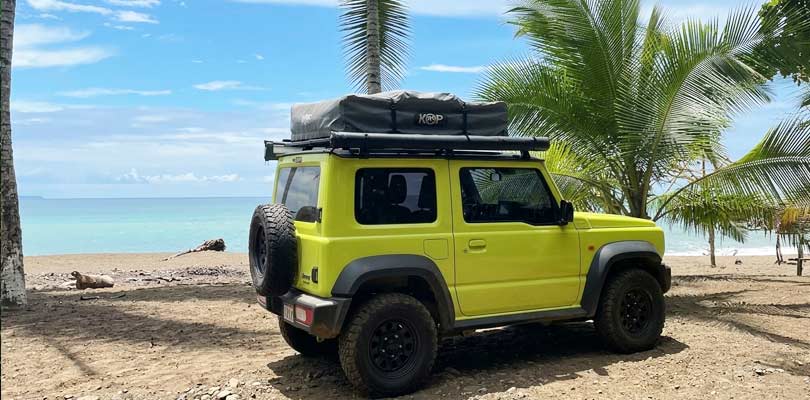
A 4WD rental vehicle is essential for exploring the Osa Peninsula independently. The road from Puerto Jiménez to Carate (the southern entry point to the park) is 43 km of rocky, muddy track that becomes a serious 4WD challenge near Cabo Matapalo. During the rainy season, river crossings can be impassable without a high-clearance vehicle.
From Puerto Jiménez, the town itself is accessible on paved roads from the Costanera Sur highway. Drake Bay has no road connection to the rest of the peninsula — access is exclusively by air or boat, which is part of what makes it feel so remote and special.
For those basing themselves in Drake Bay, most activities are arranged through your lodge and involve boat transport. For Puerto Jiménez visitors, a rental 4WD gives far greater flexibility to explore El Tigre, Carate, Matapalo, and the surrounding villages at your own pace.
💡 Local Tips & Insider Advice
- Book early — Sirena visitor permits sell out months in advance during high season. If your travel dates are fixed, secure your guide and permit before booking flights.
- Choose your guide carefully — a knowledgeable, passionate guide transforms the experience. Ask your lodge or tour company about the guide’s specific experience with wildlife tracking and Corcovado specifically.
- Spend the night — a day trip to Sirena is worthwhile, but an overnight stay is transformative. Dawn and dusk are the peak wildlife hours, and you’ll miss them entirely on a day tour.
- Arrive fit — even a day tour involves 4–6 hours of hiking in heat and humidity on uneven terrain. Multi-day beach treks are physically demanding. Assess your fitness honestly before committing to a long trail itinerary.
- Use Waze for road navigation around the Osa Peninsula — locals strongly prefer it to Google Maps for tracking road conditions, river crossing status, and construction delays.
- Carry cash — ATMs in Drake Bay and Puerto Jiménez can run out of cash or be offline. Bring a mix of US dollars and Costa Rican colones before you head out to the peninsula.
- Watch the tides — beach trails between stations are passable only at low tide. Download a tide chart app and plan your hiking accordingly. Being caught on a beach trail at high tide with no alternative route is a genuine safety issue.
- Expect wildlife encounters at the station — tapirs routinely visit the cleared areas around Sirena Ranger Station, particularly at dusk. Stepping outside after dinner with a torch almost always reveals something extraordinary.
- Respect the silence — Corcovado’s magic is in its wildness. Keep voices low on the trails, turn off flash photography, and allow wildlife to behave naturally. The guides will lead by example.
